Breast Asymmetry Assessment
What Causes Breast Asymmetry and How Can It Be Corrected?
Understand differences in volume, shape, fold and chest wall, when breast-health assessment matters, and how individual correction options are chosen.

Visual note: The clinical illustrations on this page contain no patient, actual operation or treatment result; they explain assessment and planning concepts only.
Short answer: Breast asymmetry means the breasts differ in volume, shape, nipple position, inframammary-fold level or relationship to the chest wall. Small differences are extremely common. A marked or newly developing difference should first be evaluated for its cause and breast health. A correction plan may enlarge the smaller side, reduce the larger side, lift one or both breasts, use fat grafting, or combine methods. The goal is a safer, better balance—not mathematical identity.
What does breast asymmetry mean?
Breast asymmetry is more than one breast being larger. The footprint, distribution of tissue, lower-pole length, nipple–areola height and direction, fold level and skin quality may differ. Two breasts that seem to fill a similar bra size can still have a visible difference in shape.
The first planning question is which feature matters most to the person. A volume difference seen in clothing is not corrected in the same way as a nipple or fold difference seen without clothing. A breast asymmetry correction assessment should separate these components.
Is mild asymmetry normal?
Yes. Human bodies are not mirror images. The ribs, sternum, shoulder level and breast tissue can differ slightly. A small stable difference does not imply disease or a need for surgery. A well-fitted bra, removable insert or clothing adjustment may be enough.
Calling a difference common should not dismiss its impact. Consultation is reasonable when it affects clothing, exercise, intimacy or body confidence, but the outcome of a consultation does not have to be an operation.
Why should new asymmetry be medically assessed first?
A difference present since puberty is not the same as unilateral enlargement developing over weeks or months. A new lump, skin indentation or orange-peel change, spontaneous or bloody nipple discharge, new inversion, persistent redness, focal pain or underarm swelling requires appropriate breast assessment before aesthetic planning.
These findings do not automatically mean cancer, but they should not be labelled “just asymmetry” online. Depending on age, history and examination, ultrasound, mammography or other imaging may be appropriate. Aesthetic surgery is not a substitute for diagnosing an unexplained change.
Which dimensions are assessed?
Volume and tissue distribution
Total volume matters, but so does where the tissue sits. A wider, flatter breast can look different from a narrower breast with more projection even when their volumes are similar. Planning is therefore not a simple millilitre-matching exercise.
Nipple and areola
The height, distance from the midline, direction and areolar diameter are compared. A lower nipple is not always explained by skin laxity alone; fold or chest-wall differences can contribute. Changing only the areola may leave the underlying shape difference untouched.
Inframammary fold and lower pole
One fold may sit higher, one lower pole may be constricted, or previous surgery may have displaced the fold. Altering a fold has implications for support and scar position. It should not be treated as merely straightening a line in a photograph.
Chest wall and shoulders
Rib prominence, sternum angle, posture, shoulder height and spinal curvature can change how each breast points forward or outward. Breast surgery may improve the breast envelope while an underlying skeletal difference remains visible. Showing this during examination supports realistic goals.
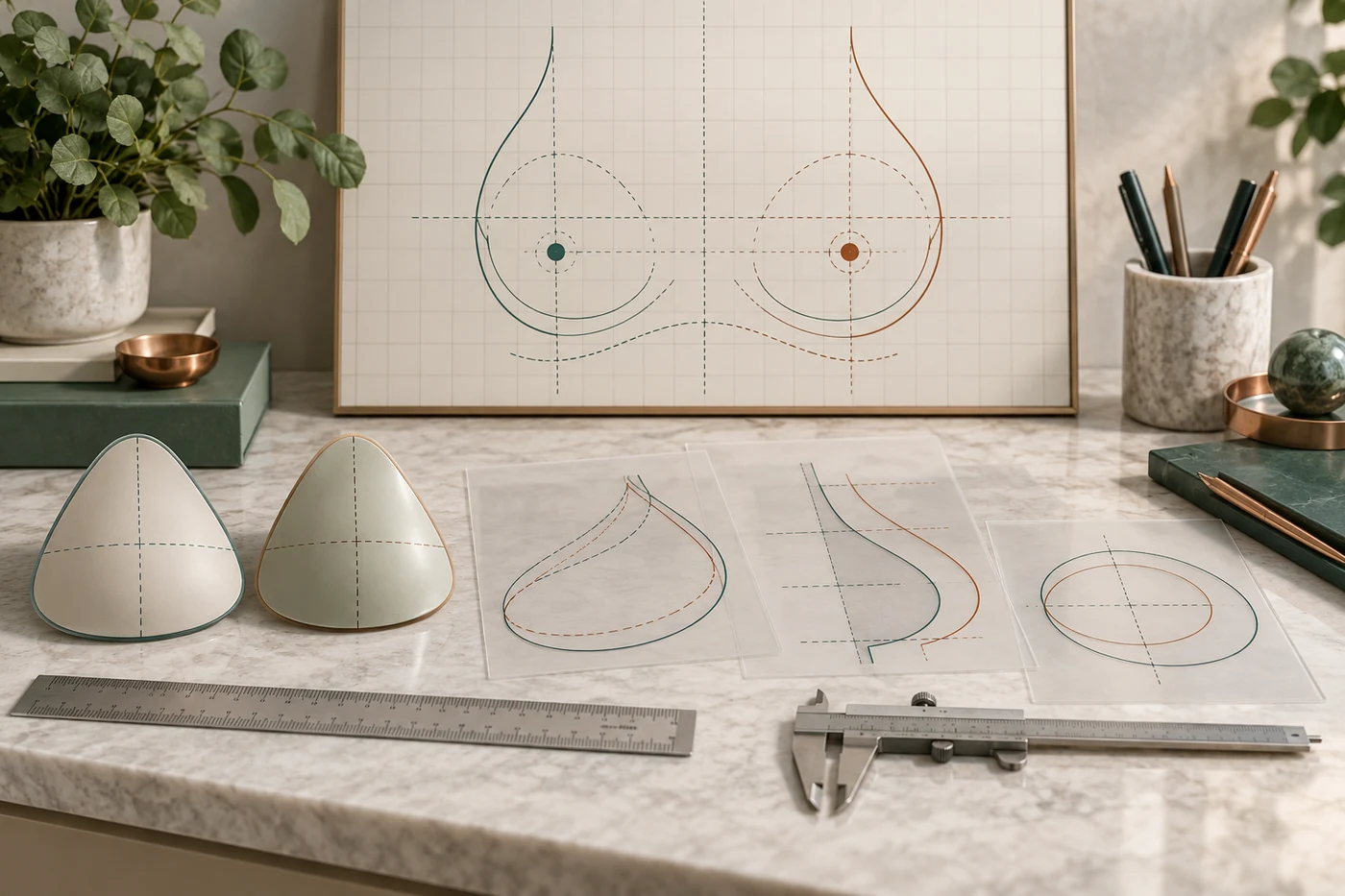
What can cause breast asymmetry?
Causes range from developmental anatomy to pregnancy, weight change, ageing, trauma and previous surgery. More than one factor may be present. Identifying the likely cause affects imaging, timing and whether one or both sides should be treated.
Developmental volume difference
One breast may develop more than the other during puberty. The difference can stabilise after maturity or change with weight and hormonal stages. In adolescents, the pattern of development, psychosocial burden and appropriate paediatric or breast-health input matter before irreversible decisions.
Tuberous or constricted breast features
A narrow base, high fold, deficient lower pole and enlarged or herniated areola can occur together. This is not simply a small breast. Releasing a constricted lower pole and redistributing tissue may be as important as adding volume. Classifications help describe anatomy but do not choose an operation by themselves.
Poland syndrome and chest-wall differences
Rare developmental conditions can affect the pectoral muscle, ribs or upper limb as well as breast development. Matching implant volumes alone may be insufficient. Muscle anatomy, soft-tissue cover, the chest wall and staged reconstructive options may need multidisciplinary assessment.
Pregnancy, breastfeeding, weight change and ageing
The two breasts may not respond equally. One side can lose more volume, stretch more or sit lower. Measurements taken during active weight change or shortly after breastfeeding may not represent the stable anatomy, so timing should be individualised.
Previous surgery, implants, trauma or radiotherapy
Scars, capsular contracture, implant displacement, tissue removal, fat necrosis, infection, trauma or radiotherapy can alter shape. Operation notes, implant cards and imaging are useful. If implant exchange or removal is considered, the capsule, pocket and natural tissues are assessed together.
How is consultation and measurement performed?
The history covers when the difference appeared, pregnancy and breastfeeding, weight change, medicines, personal and family breast history, nicotine use and previous operations. Standing examination looks at the chest wall, skin, tissue thickness, base width, fold and nipple position.
Standardised photographs and selected volume-estimation tools can improve communication. Three-dimensional simulation may help compare ideas, but it is not a result guarantee. No scanner can predict healing or the future behaviour of both sides with certainty.
When is breast imaging needed?
Imaging depends on age, symptoms, clinical findings, personal risk and screening guidance. A new unexplained unilateral change, lump or discharge should receive diagnostic assessment without being delayed for cosmetic planning. People with implants may require ultrasound or MRI according to the device and clinical question.
Preoperative imaging is not a single test for everyone. The surgeon should explain whether radiology or breast-surgery input is required. A normal scan does not promise perfect symmetry after surgery; breast health and aesthetic predictability are separate questions.
Why is perfect symmetry not a reliable goal?
The two sides do not have identical skin elasticity, circulation, chest wall or healing. Surgery can reduce a difference but cannot erase every natural or acquired variation. A promise of millimetre-perfect alignment or an identical cup size is not medically credible.
A robust plan documents the starting point and identifies what can reasonably change. Residual asymmetry and possible revision belong in informed consent. This is not lowering standards; it is defining a measurable, honest objective.
How can breast asymmetry be corrected?
There is no universal procedure. The smaller side may be enlarged, the larger side reduced, one or both breasts lifted, limited contour differences treated with fat grafting, or methods combined. The choice also depends on preferences about scars, implants, overall size and long-term maintenance.
Augmenting the smaller breast
An implant can add volume and projection. Different implant sizes may be used, but size alone cannot equalise shape; footprint, profile, tissue coverage and fold position must also fit. Implants are not lifetime devices and require follow-up. See the breast augmentation overview for the wider decision framework.
Reducing the larger breast
Unilateral reduction or different reductions on both sides can remove skin and tissue and reposition the nipple. Scars, altered sensation, breastfeeding potential and blood-supply risks must be discussed. Removed grams do not translate directly into a guaranteed cup size. The breast reduction page explains the procedure.
Lifting one or both sides
A breast lift addresses position and excess skin. One-sided lifting is possible, but the likely future change of the other breast matters. A lift does not add volume; augmentation or reduction may be combined when needed.
Fat grafting for contour differences
Fat collected by liposuction can treat selected small-volume or contour differences. Not all transferred fat survives, retention varies, and more than one session may be required. Donor-site effects, fat necrosis, cysts, calcification and implications for imaging should be included in consent.

How do the options compare?
| Approach | Main purpose | Key trade-off |
|---|---|---|
| Implant | Add volume and projection to the smaller side | Device surveillance, capsule and possible future surgery |
| Reduction | Remove skin and tissue from the larger side | Longer scars; possible sensation and breastfeeding changes |
| Lift | Adjust tissue and nipple position | Scars and possible recurrent descent over time |
| Fat grafting | Soften a limited volume or contour difference | Variable retention, donor site and possible repeat sessions |
| Combined plan | Address several components | More complex surgery and different healing on each side |
The table organises a consultation; it does not select a treatment. The shortest scar does not automatically create the best shape, the largest implant the best balance, or equal resection weights an equal result.
Must both breasts be operated on?
Sometimes one side is enough; in other cases different procedures on each side offer a better balance. A smaller breast might receive an implant while the larger side is lifted or reduced. Bilateral surgery is not automatically superior and adds scars and risk.
The decision depends on the chosen reference breast, tissue quality and likely long-term change. Someone who wants to preserve the larger breast's volume has different options from someone who prefers a smaller overall size.
Where are the scars?
Scars depend on the procedure and may lie in the fold, around the areola, vertically from areola to fold, or along the fold. Fat grafting uses small access sites. Scar length is linked to the required skin and tissue adjustment and cannot always be shortened by preference alone.
Colour and thickness vary with personal healing, skin, tension, infection, sun and nicotine. Follow the wound-care plan; no cream or laser should be presented as a promise of scarless surgery.
What are the principal risks?
Risks include bleeding, infection, fluid collection, delayed healing, wide or raised scars, altered sensation, circulation problems, pain, contour irregularity, fat necrosis, persistent asymmetry and revision. With implants, capsular contracture, rupture, displacement and implant-specific rare risks also apply.
Individual risk changes with procedure extent, nicotine, diabetes, clotting history, medication, body-mass index and previous surgery or radiotherapy. It is assessed in person rather than inferred from a generic internet list.
What is recovery like?
Swelling, bruising, tightness and different healing speeds between sides can occur early. Follow the written plan for support garments, dressings, showering, sleep position, driving, work and exercise. If two different operations were combined, both sides need not feel or swell the same.
Early shape is not final. Swelling subsides, tissues settle and scars mature over months. Rapid unilateral swelling, uncontrolled pain, breathlessness, fever, spreading redness or drainage should not be watched as routine recovery. The first 30 days after breast surgery guide provides a general framework; personal discharge instructions take priority.

Why can revision never be ruled out completely?
Complex starting anatomy and different procedures on each side can increase the relevance of a small residual difference or later divergence. Tissue relaxation, weight, pregnancy, implants and scar behaviour alter the result. Revision may be considered for an early complication or for change over years.
Discussing revision does not predict failure. It establishes when the result can be judged, what difference is acceptable and under which circumstances an additional procedure might be considered.
Do pregnancy and breastfeeding plans matter?
Yes. Pregnancy and breastfeeding can change volume, skin and asymmetry again. If pregnancy is planned soon, the advantages and disadvantages of waiting should be considered. Breastfeeding potential after surgery depends on the operation and preservation of ductal and nipple connections; it cannot be guaranteed.
After breastfeeding, timing should reflect stable tissue and weight rather than a universal calendar. Surgery is planned when breast shape has settled and general health is suitable.
Why is implant selection more complex in asymmetry?
Two different implant volumes may narrow a numerical difference, yet create another shape difference if footprint, profile, soft-tissue cover or fold position do not fit. implant volume, profile and width must be considered together.
Subglandular, submuscular or dual-plane placement is also selected according to tissue cover and muscle activity on both sides. The implant-pocket guide explains these trade-offs.
Which questions should you ask at consultation?
- Which part of my asymmetry comes from volume, shape, fold, nipple position or chest wall?
- Does a new change require breast-health assessment or imaging first?
- Which breast is the reference and why?
- Is one-side or two-side surgery proposed, and what are the alternatives?
- Which differences cannot the proposed plan correct?
- How do scars, sensation, breastfeeding, implant follow-up and revision change?
- Which recovery symptoms require urgent contact?
- When can the result be assessed fairly?
Use the breast-surgery consultation checklist to organise medicines, history, imaging and implant records.
What if you travel to Antalya?
An online meeting can review goals and documents, but chest-wall, tissue, fold and skin assessment needs an in-person examination before a definitive technique or implant promise. Avoid making non-refundable travel decisions before medical planning is complete.
Allow flexibility for early checks, unexpected assessment and safe return. Movement and clot-risk precautions for a long journey should be personalised; there is no single earliest flight date for everyone.
Op. Dr. Bahadır Çelik's approach
The assessment separates chest wall, footprint, volume, tissue distribution, fold, nipple position and skin rather than using the vague goal of “making both breasts the same.” The intended change on each side is explained together with its scar, risk and long-term responsibility.
The purpose is not to promote one technique, but to clarify the individual rationale for enlargement, reduction, lift, fat grafting or observation. Prepare previous imaging and operation records before using the contact page.

Conclusion: identify the cause before planning balance
Breast asymmetry is not one measurement or one operation. A stable developmental difference should be distinguished from a new change, and breast-health concerns assessed first. If surgery is considered, volume, shape, position and tissue quality on both sides need separate planning.
The strongest consultation asks not only “which operation is best?” but “what creates my difference, how much can safely change and what may remain?” That turns breast asymmetry correction from a promise of perfection into a reasoned, reviewable decision.
Medical note: This article is general information, not personal diagnosis or surgical advice. Seek appropriate medical assessment promptly for a new lump, bloody discharge, skin indentation, rapid unilateral enlargement, persistent redness or unexplained new asymmetry.
References
- American Society of Plastic Surgeons — Surgical options for uneven breasts
- American Society of Plastic Surgeons — Breast augmentation
- American Society of Plastic Surgeons — Breast lift
- American Society of Plastic Surgeons — Breast reduction safety
- US National Cancer Institute — Breast cancer signs and symptoms
- NHS — Breast cancer in women
- Nuzzi et al. — Psychological impact of breast asymmetry on adolescents
- Mareti et al. — Breast disorders in adolescence: review
- van Durme et al. — Surgical strategies for tuberous breast deformity
- Republic of Türkiye Ministry of Health — Regulation on healthcare promotion and information
FAQ
Frequently asked questions
Is breast asymmetry normal?+
Can breast asymmetry be corrected without surgery?+
Do both breasts need surgery for asymmetry?+
Do different implant sizes completely correct asymmetry?+
Is fat grafting enough for uneven breasts?+
How is nipple asymmetry corrected?+
Will the breasts be exactly equal after surgery?+
Is newly developed breast asymmetry dangerous?+
Related information

Implant Planning Guide · 16 min read
Why Volume Alone Is Not Enough When Choosing Breast Implants
Read article↗
Postoperative Recovery Guide · 17 min read
The First 30 Days After Breast Surgery: A Recovery Guide
Read article↗
Lift and Volume Decision Guide · 19 min read