Safe Reduction Target
How Much Smaller Can Breasts Be After Breast Reduction?
Move beyond cup-size and gram promises: understand how footprint, tissue, symptoms, technique, scars and blood supply shape a safe reduction range.

Visual note: The clinical images on this page contain no patient, actual operation or treatment result. They are patient-free editorial illustrations of measurement, technique and recovery concepts.
Short answer: There is no reliable examination-free answer to “how many cup sizes can breast reduction remove?” Bra cups are not standardised across brands, and resection weight alone does not define the result. The aim is enough reduction to improve symptoms and proportion while protecting nipple–areola blood supply, sensation, tissue quality and the person's priorities as far as possible.
What does breast reduction change?
Breast reduction removes part of the excess breast tissue, fat and skin, reshapes what remains and, in most techniques, moves the nipple–areola complex to a more suitable position. It is therefore both a volume-reduction and lifting procedure.
The objective is not merely fewer grams. Neck, back and shoulder burden, bra-strap grooves, skin irritation, exercise and clothing difficulties are considered alongside desired proportion. The target is a safe, balanced and sustainable size rather than the smallest breast technically imaginable.
Why can an exact cup size not be promised?
Bra cups do not use one international volume standard. The same person may wear different letters across brand, style and band size. Postoperative swelling, weight, tissue settling and bra construction also alter the label. A promise that “D becomes C” is therefore not a reliable surgical endpoint.
Consultation should discuss volume in clothing, footprint, projection, skin contact, physical symptoms and proportion examples rather than a letter alone. Reference photographs can improve communication but cannot copy another person's anatomy or result.
Why does resection weight not define the result?
The same weight looks different in a dense narrow breast and a broad breast with a higher fat content. Equal grams from both sides do not necessarily create symmetry. Starting volume, tissue density, footprint, skin and chest wall all influence shape.
Patient-reported outcome research indicates that quality-of-life improvement is not explained by resection weight alone. Grams are an important operative record, but not a stand-alone prediction of comfort, cup size or satisfaction.
Which measurements determine the possible reduction?
Breast footprint and chest circumference
The width attached to the chest and the torso circumference affect how remaining volume sits. A wide footprint cannot always be forced safely into a very narrow form. Planning works with the base while adjusting projection and distribution.
Nipple-to-fold distance and ptosis
Nipple position is measured relative to the fold and sternum. More descent and skin excess may change the skin pattern and the tissue pedicle that carries the nipple. Safe travel of the nipple matters as much as removed volume.
Tissue density and fat proportion
Gland and fat affect texture and reshaping. Liposuction can help selected fatty lateral fullness, but cannot by itself remove excess skin, raise a low nipple or reduce dense gland in the same way. Examination and, when needed, imaging inform the plan.
Symptoms and daily activity
Pain, shoulder grooves, intertrigo, activity limitation and clothing difficulty are recorded. These symptoms can have other causes, so complete relief cannot be promised. Functional priorities are nevertheless as important as aesthetic proportion when setting a target.
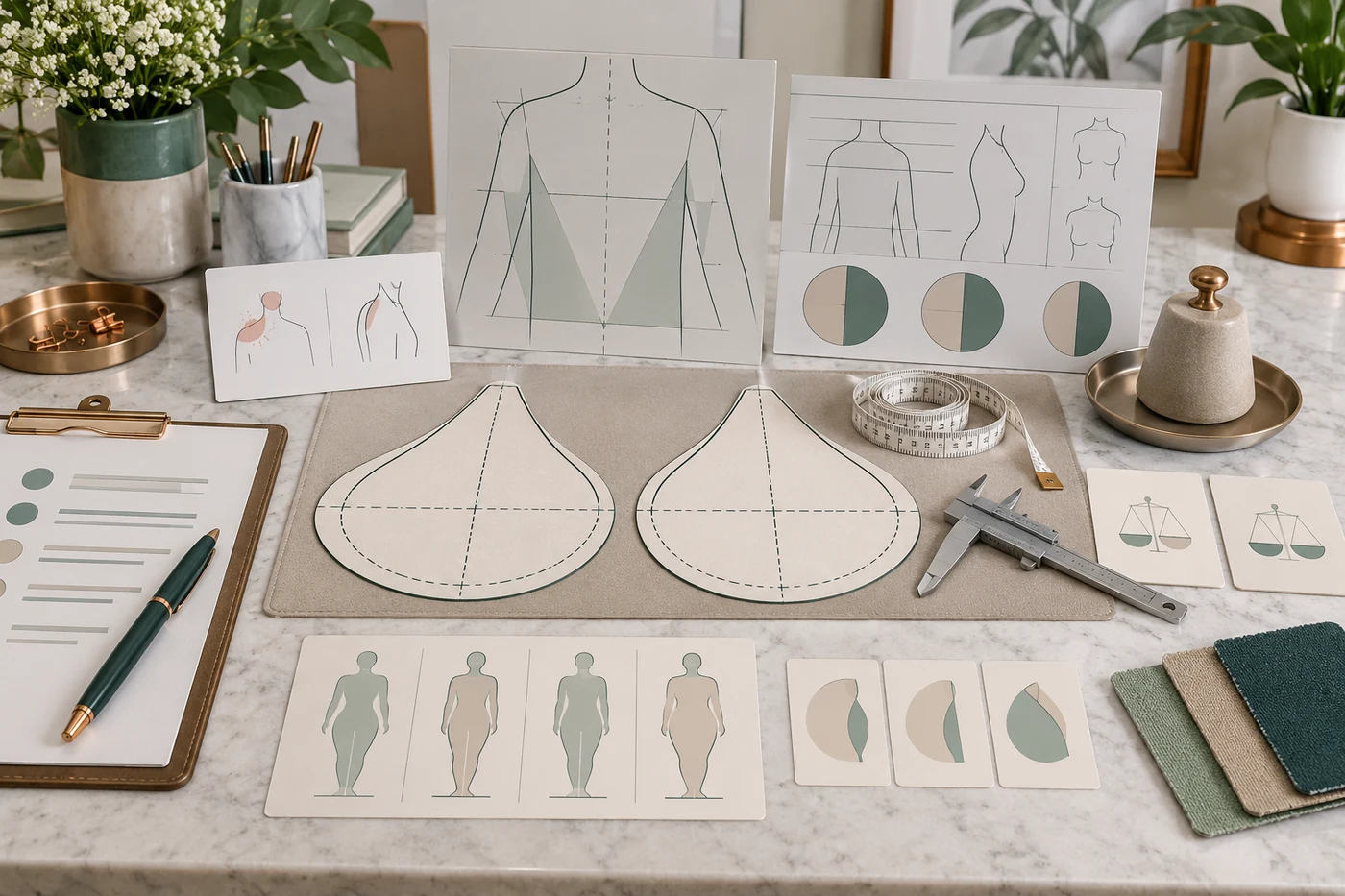
How is body proportion assessed?
Shoulder and hip width, torso length, breast footprint and clothing preferences are discussed. Proportion is not one universal aesthetic ratio. Preference for a smaller shape, retained fullness or a more natural upper pole affects the plan. The surgeon explains the safe range allowed by the tissues.
Simulation and sample photographs can aid discussion but cannot be replicated because tissue and healing differ. A defensible goal is a range grounded in the person's measurements and priorities, not “the size in this photograph.”
Is removing more tissue always better?
No. A greater reduction may provide desired lightness but can place more demands on nipple–areola blood supply, sensation, wound healing and shape. The safe amount changes with anatomy and pedicle design.
If an extremely small target conflicts with the footprint and tissue thickness, it may risk a flat, irregular or poorly perfused result. Explaining limits is not dismissing a request; it aligns the goal with tissue safety.
Is breast reduction also a lift?
Most techniques remove skin and elevate the nipple, so they include a lifting effect. The main difference from a breast lift is the deliberate removal of substantial tissue volume. If volume is acceptable and descent is the concern, a lift alone may be more appropriate.
Claims of “scarless reduction” or “lift with liposuction only” should not be generalised. Skin excess and a low nipple require skin incisions. The article on lift versus volume procedures explains this distinction.
How is the reduction technique chosen?
Before a technique name, the surgeon considers tissue removal, skin excess, nipple travel, blood supply and experience. Vertical, inverted-T and other skin patterns can be combined with superior, superomedial, inferior or other pedicles. The same external scar does not always mean the same internal method.
The newest or shortest-scar technique is not automatically safest. There are trade-offs between scar length, shape control and reduction capacity. Ask why the proposed method fits your measurements rather than choosing by a label.
What is a pedicle?
A pedicle is the bridge of tissue that carries the nipple–areola complex with blood vessels, nerves and tissue connections. Its direction and thickness are selected for the anatomy and plan. Preserving it matters for circulation, sensation and breastfeeding potential, although no technique guarantees these functions.
When is a vertical scar used?
A periareolar and downward vertical scar may be used in selected small, moderate and some larger reductions. Suitability depends on skin excess and footprint as well as grams. Early lower-pole gathering or a high shape may settle with time.
When is an inverted-T scar needed?
The periareolar, vertical and fold scar can give control when there is marked skin excess and major reshaping. It creates a longer scar; the horizontal length varies. A longer scar does not by itself mean an inferior result.
What is the role of liposuction?
Liposuction can help fatty lateral extension or selected fat-dominant volume. It does not lift the nipple, remove excess skin or reduce dense gland in the same way. Examination determines whether it is used alone in a rare selected case or as an adjunct.

How much reduction is possible in very large breasts?
Substantial tissue can be removed in very large, markedly ptotic breasts, but the safe limit is individual. Nipple travel, pedicle length, vascular anatomy, nicotine, diabetes and previous operations alter the plan.
In selected extreme cases, a free nipple graft may be discussed. The nipple–areola is detached and grafted, with major trade-offs in sensation, pigmentation, projection and breastfeeding. It is not a routine shortcut to remove more tissue.
Is the same amount removed from both sides?
Not necessarily. If starting volume or shape differs, resection weights can differ. Equal grams do not ensure symmetry when the chest wall and distribution are unequal. Preoperative measurements and intraoperative shape assessment are used together.
Some residual difference is possible. With marked inequality, a breast asymmetry assessment helps distinguish breast tissue from chest-wall factors.
How should common goals be interpreted?
| Goal | Planning use | Why it is insufficient alone |
|---|---|---|
| A cup letter | Clothing preference | Varies by brand and band size |
| A gram target | Operative tissue record | Does not define shape, density or symptoms |
| Smallest possible size | Desire for lightness | Blood supply, footprint and shape impose limits |
| More proportionate shape | Footprint, torso and preference | Proportion is an individual anatomical range |
| Symptom relief | Pain, irritation and activity | Symptoms can have additional causes |
What does preoperative health assessment include?
Medical conditions, medicines and supplements, allergies, bleeding or clotting history, pregnancy plans, breastfeeding priorities, nicotine, weight change and previous operations are reviewed. Breast imaging may be recommended according to age, history, examination and screening programmes.
Rapid weight change can change the result; a sustainable weight near the intended range is preferred. This is not one universal body-mass-index rule. Risks are individual and other conditions may need optimisation first.
Why are smoking and nicotine especially important?
Nicotine narrows blood vessels and reduces tissue perfusion. Breast reduction involves long skin edges and a relocated nipple–areola complex, so delayed healing, wound separation, infection and tissue loss are important concerns. Vaping and other nicotine products must also be disclosed.
The required cessation period depends on the surgical and anaesthetic plan. Hiding nicotine use reduces safety; testing or postponement policies vary. Primary-care or cessation support may be appropriate.
Are mammography or ultrasound required?
There is no identical test for everyone. Age, personal and family history, examination and national screening guidance apply. A new lump, discharge or skin change needs diagnostic assessment before elective surgery.
Pathological examination of removed tissue follows local practice and the clinical plan. The surgeon and breast-health team advise on postoperative baseline imaging; screening responsibilities continue after surgery.
How are anaesthesia and hospital stay planned?
Breast reduction is usually performed under general anaesthesia. Procedure extent, combined surgery, general health and facility protocol affect same-day discharge or a short stay. Drain use is not identical in every case.
Controlled pain and nausea, safe movement, wound review and responsible adult support matter before discharge. Travellers must plan early checks and possible additional assessment, not only the operation date.
What is expected in the first days?
Swelling, bruising, tightness, temporary sensation change and early side-to-side differences may occur. Follow instructions for dressings, support bra, showering, sleep and arm movement. Pain varies; use medicines as prescribed.
Rapid unilateral swelling, uncontrolled pain, breathlessness, chest pain, fever, spreading redness, foul drainage or a marked nipple-colour change should not be watched as routine recovery. Know the urgent contact route before leaving the facility.
When does the breast shape settle?
Early breasts can look high, firm or angular. The lower pole softens as swelling subsides, and sides may settle at different speeds. An early photograph does not establish final shape or cup size.
Scars can be pink and prominent before maturing over months. The fair review point depends on procedure and healing. The first 30 days after breast surgery guide provides a general framework.
When can work, exercise and travel resume?
Return to work depends on physical demands, incision healing, pain and complications. Desk work and heavy lifting do not share a timetable. Walking is usually progressed gradually, while strenuous upper-body work and swimming await wound readiness.
Driving requires freedom from impairing medicines, seat-belt tolerance and safe manoeuvring. Long flights involve clot risk and access to care. Progress should follow clinical review rather than a fixed internet date.

What are the principal risks?
Risks include bleeding, haematoma, infection, fluid collection, delayed healing, wound separation, wide or raised scars, fat necrosis, contour irregularity, asymmetry, persistent pain and revision. Anaesthetic and clot risks are assessed with general health.
Partial or total nipple–areola loss is uncommon but serious. Long nipple travel, nicotine and certain conditions can increase risk. No technique eliminates complications. Early-warning and contact instructions belong in consent.
Can nipple sensation change?
Temporary numbness or hypersensitivity can occur. Sensation may improve over months, yet permanent reduction or loss is possible. Persistent increased sensitivity or painful altered sensation is less common.
Risk varies with anatomy, resection, travel distance and technique. No method can guarantee sensation. Its importance for daily and sexual function should be discussed openly.
Is breastfeeding possible?
Some people breastfeed after reduction, some produce part of the required milk and some cannot. The outcome depends on ducts, gland, nerves, nipple connections, pregnancy and infant factors. No technique guarantees future breastfeeding.
Tell the surgeon about future plans. Greater reduction and functional preservation may involve trade-offs. Pregnancy can enlarge or lower the breast again; that reflects a new biological process, not necessarily a failed operation.
Does weight change affect the result?
Breasts contain fat, so gain or loss can change volume and skin. Major weight loss may leave emptiness; gain can enlarge the remaining tissue. If substantial change is planned soon, timing should be discussed.
Reduction is not a weight-loss procedure. Removed tissue is a small part of body weight; the goal is to change breast load and shape. General health management remains separate.
Can the breasts grow or descend again?
Ageing, gravity, weight, pregnancy and hormones continue to affect the remaining tissue. Surgery does not stop biology. Regrowth or recurrent descent can occur over years and its degree cannot be precisely predicted.
Supportive garments, stable weight and avoiding nicotine can support tissue health but do not lock the result permanently. Any later revision reassesses scars, blood supply and the original technique.
Which questions should you ask?
- What is my safe target range and which measurements define it?
- Does my desired reduction fit my footprint and nipple blood supply?
- Which pedicle and scar pattern do you recommend, and why?
- How will we describe the result without relying on a cup letter?
- How may sensation and breastfeeding be affected?
- Will liposuction be added, and what can it not change?
- What are the pathology and breast-imaging plans?
- Which symptoms require urgent contact?
- How will return to work, sport and travel be cleared?
- When are residual asymmetry and revision assessed?
Use the breast-surgery consultation checklist to organise medicines, tests and health records.
What should people travelling to Antalya plan?
An online preliminary meeting can review goals and history, but tissue, fold, nipple perfusion and final technique require an in-person examination. Do not let non-refundable flights define medical suitability or the operation date.
Allow time for wound checks, dressing changes or unexpected assessment. Know what local care is available after return and how to contact the surgical team. The earliest flight depends on clot risk, procedure extent and healing.
Op. Dr. Bahadır Çelik's approach
The reduction target is not defined by a cup letter or grams alone. Footprint, skin, tissue density, nipple position, chest wall, asymmetry, symptoms, sensation and breastfeeding priorities are incorporated into one plan.
The rationale for the pedicle and scar, the trade-offs of more or less reduction and possible residual differences are explained. The objective is not to remove as much as possible but to align the person's goal with tissue safety. Prepare imaging and health records before using the contact page.

Conclusion: the target is a safe range, not a cup letter
The possible reduction depends on starting volume, footprint, tissue, skin, nipple travel, symptoms and preference. Cup size and grams can support discussion, but neither alone defines outcome or satisfaction.
A strong plan changes “how many sizes?” into “what range improves my symptoms and proportion while respecting perfusion, sensation, shape and long-term change?” This makes the breast reduction assessment realistic, individual and reviewable.
Medical note: This article is general information, not personal diagnosis or surgical advice. Technique, reduction amount, risk and follow-up can be determined only after examination, health history and any indicated imaging.
References
- American Society of Plastic Surgeons — Breast reduction
- American Society of Plastic Surgeons — Breast reduction consultation
- American Society of Plastic Surgeons — Breast reduction preparation
- American Society of Plastic Surgeons — Breast reduction procedure
- American Society of Plastic Surgeons — Breast reduction risks and safety
- American Society of Plastic Surgeons — Breast reduction recovery
- NHS — Breast reduction (female)
- Wang et al. — Patient-reported outcomes after reduction mammoplasty
- Widmark-Jensen et al. — Risks and benefits of breast reduction: systematic review and meta-analysis
- Republic of Türkiye Ministry of Health — Regulation on healthcare promotion and information
FAQ
Frequently asked questions
How many cup sizes can breast reduction remove?+
How many grams are removed in breast reduction?+
Does breast reduction include a lift?+
Where are breast-reduction scars?+
Can breast reduction change nipple sensation?+
Can I breastfeed after breast reduction?+
Can breasts grow again after reduction?+
When can I return to work and exercise after breast reduction?+
Related information
Implant Planning Guide · 16 min read
Why Volume Alone Is Not Enough When Choosing Breast Implants
Read article↗
Postoperative Recovery Guide · 17 min read
The First 30 Days After Breast Surgery: A Recovery Guide
Read article↗
Lift and Volume Decision Guide · 19 min read