Breast Surgery · Antalya
Breast Lift Surgery
A comprehensive guide to nipple position, excess skin, existing tissue, scar patterns, implant decisions, recovery, risks and long-term change after a breast lift.
Results of every surgical or invasive procedure may vary from person to person. You are advised to obtain detailed information from your doctor before the procedure.
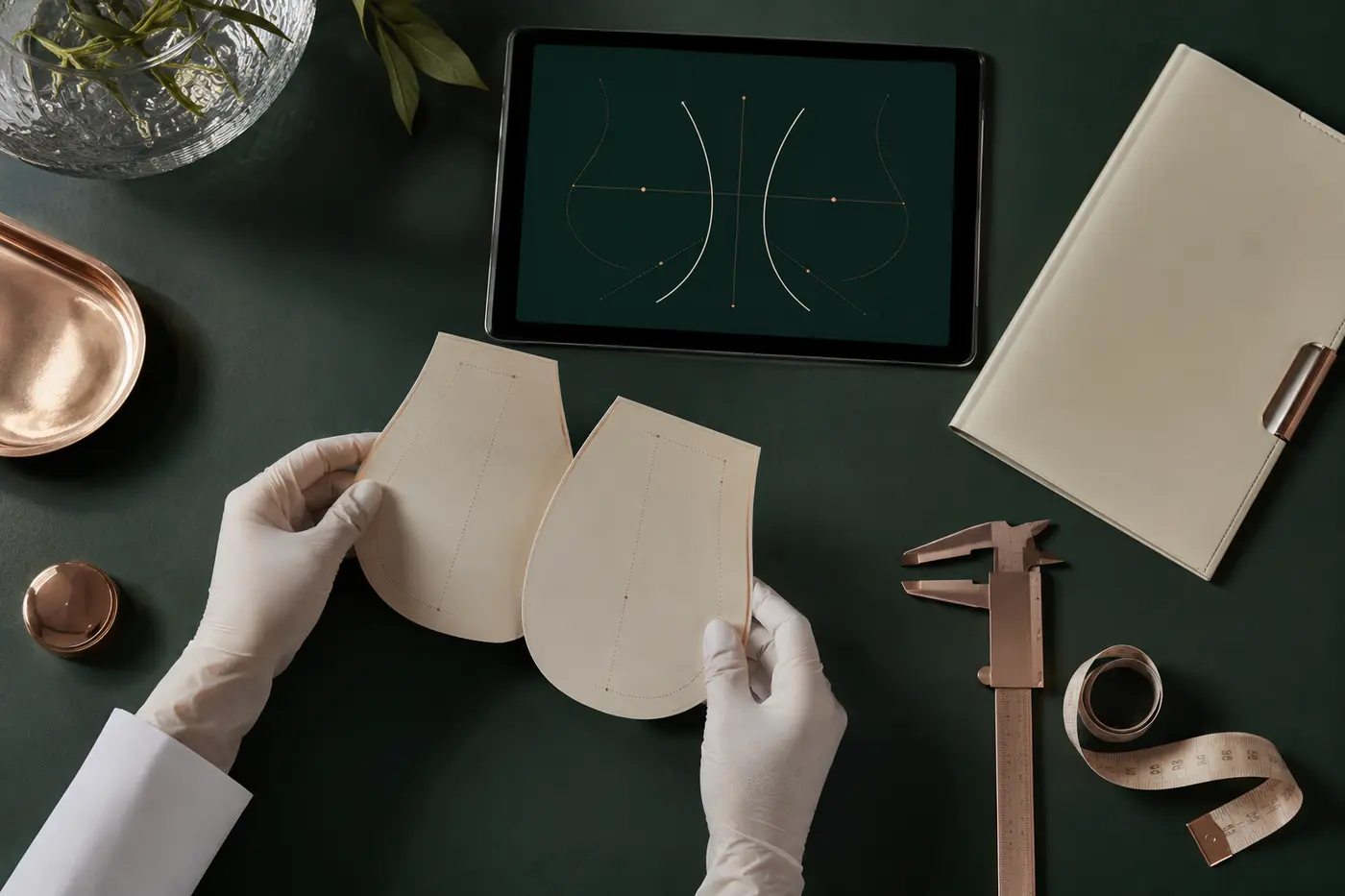
The cover and planning images on this page are illustrative; they do not show a real patient or a treatment result.
Researching breast lift surgery involves more than deciding how low the breasts appear. The position of the nipple and areola in relation to the breast crease, excess skin, the amount and distribution of existing breast tissue, the wish for upper-pole fullness, asymmetry, future pregnancy and planned weight change all matter. The objective is not to reproduce one standard shape. It is to explain what may be changed within the individual anatomy, which scars may be required and how the breast can continue to change over time.
Short answer: A breast lift, or mastopexy, removes a planned amount of excess skin, reshapes breast tissue and repositions the nipple–areola complex. It does not by itself provide a substantial increase in volume. Examination findings and personal goals determine whether an implant, fat transfer or reduction should also be discussed.
What is breast lift surgery?
A breast lift reorganises the relationship between the skin envelope and the existing breast tissue. Excess skin is removed in a planned pattern, the tissue is reshaped, and the nipple and areola are moved to a more appropriate level. An enlarged areola may also be reduced when indicated. Technique varies with breast size, degree of ptosis, tissue quality and the intended change.
A lift does not create a permanent shield against gravity. Ageing, pregnancy, breastfeeding, weight change and natural tissue characteristics can continue to affect shape after surgery. Planning therefore covers not only the early contour but also scars and the likely behaviour of the tissues in the longer term.
What can a breast lift change—and what can it not change?
A lift may reposition a downward-pointing nipple and areola, reduce excess skin, arrange existing tissue into a more supported shape and lessen a difference in level between the sides. It does not significantly increase breast volume and may not create pronounced upper-pole fullness on its own. A reduction is considered when the breasts are also large and heavy. An implant, or fat transfer in selected circumstances, is a separate discussion when additional volume is wanted.
| Main concern | Approach that may be discussed | Important limitation |
|---|---|---|
| Excess skin and a low nipple position with adequate existing volume | Breast lift without an implant | Does not markedly add volume; upper fullness depends on existing tissue |
| A lift plus additional volume or upper-pole fullness | Lift and implant, in one operation or stages | Adds implant-specific risks and long-term follow-up |
| Drooping together with breasts that feel overly large or heavy | Breast reduction with lift | Tissue removal is planned around blood supply and breastfeeding goals |
| A limited contour or soft-tissue support requirement | Fat transfer in selected patients | Some transferred fat may be absorbed and the volume effect is limited |
A larger implant does not remove true excess skin. An implant that is too heavy for the tissue capacity may add stretch over time. The appropriate operation cannot be decided from a photograph or bra size alone; it requires an upright clinical assessment.
How is breast ptosis assessed?
Ptosis is not a single measurement. Assessment considers the nipple level relative to the breast crease, how much breast tissue lies below the crease, the direction of the areola, skin quality and the distribution of volume between the upper and lower breast. Sometimes the nipple remains at an appropriate level while tissue settles in the lower pole. In other cases there is substantial skin excess and a downward-pointing areola. These findings do not require the same plan.
Nipple and areola position
The nipple is evaluated in relation to the chest wall, breast crease and overall breast volume—not simply its height from the floor. Any difference in level or direction between the sides is documented, together with how much of it surgery may reasonably reduce.
Excess skin and elasticity
Pregnancy, breastfeeding, weight fluctuation, ageing and inherited characteristics can affect elasticity. The tension the skin can support matters when selecting the scar pattern and discussing how the result may change with time.
Existing tissue and upper-pole fullness
When adequate tissue is present, it can be reshaped without an implant. If more defined upper fullness is important, the amount that the existing tissue can provide should be explained realistically. The potential contribution and additional risks of an implant or fat transfer can then be compared.
Asymmetry and the chest wall
Differences in volume, breast base, crease and nipple level are common. The rib cage or spine can also influence appearance. Surgery may reduce asymmetry, but the human body is not mathematically identical on both sides and exact permanent symmetry cannot be promised.
How are the incision and scar pattern selected?
Breast lift surgery leaves scars. The goal cannot be the shortest incision in isolation; the plan must safely manage the excess skin and support reshaping. The degree of ptosis, amount of skin, breast volume, areola size and any combined procedure influence the pattern.
Periareolar incision
The incision runs around the areola only. It may be considered in selected cases with limited skin excess. Forcing this method in more advanced ptosis can increase the chance of widening, flattening or an irregular scar around the areola.
Vertical or “lollipop” incision
A vertical line from the areola towards the breast crease is added to the periareolar incision. It can permit management of moderate skin excess and three-dimensional tissue reshaping.
Inverted-T or “anchor” incision
A horizontal line in the breast crease is added to the periareolar and vertical lines. This may be required for substantial skin excess, a larger breast or more advanced ptosis. A longer scar can be necessary to obtain controlled skin removal and reshaping in some anatomies.

Scars are permanent. They may initially look pink, dark or raised and usually change over time. Genetics, skin type, nicotine, infection, wound tension and aftercare can all affect their appearance. It is not possible to state that no scar will remain or that it will become invisible by a certain date.
Is an implant necessary, and can augmentation and lift be combined?
An implant is not a required part of a breast lift. When existing tissue volume is adequate, reshaping alone may be suitable. An implant is a medical device considered separately to add volume and, in particular, upper-pole fullness. These objectives should not be confused.
Lift and implant can be planned in one operation for some patients and in two stages for others. Reducing the skin envelope while adding volume creates opposing forces on the tissues. Tissue quality, intended implant size, blood supply, previous surgery and the possibility of revision all affect the decision. A staged plan means more than one operation, but it may make shape and safety easier to assess in selected complex cases.
What is assessed during consultation?
- The personal goal and the exact feature causing concern
- General health, medication, allergies and previous operations
- Smoking, vaping and any other nicotine use
- Plans for pregnancy, breastfeeding or significant weight change
- Family history of breast cancer, previous biopsies and breast imaging
- Breast volume, base width, skin quality, crease and nipple position
- Asymmetry, chest-wall features and existing scars
- Lift, reduction, implant, fat transfer and the option of no operation
Breast imaging may be requested before surgery according to age, symptoms and personal risk. A new lump, discharge, skin retraction or rapid one-sided change requires diagnostic assessment first. Aesthetic surgery should not delay investigation of an unexplained breast finding.
How is the operation planned and performed?
Preoperative markings are usually made while the patient is upright. The intended nipple level, planned skin removal, tissue reshaping and scar pattern are mapped together. The procedure takes place in an appropriately licensed facility with anaesthesia support. The type of anaesthesia, operation time, overnight stay and possible use of drains vary with the individual plan.
During surgery, breast tissue is reshaped with the selected technique, the nipple–areola complex is moved while preserving its blood supply, and excess skin is removed. The nipple usually remains attached to a tissue pedicle rather than being fully detached. Very large, severely ptotic breasts or particular medical circumstances may require a different approach; its implications for sensation and breastfeeding should be explained separately.
What is recovery like after a breast lift?
| Period | Common experiences | General approach |
|---|---|---|
| First 72 hours | Swelling, tightness, bruising, tenderness and temporary sensation change | Prescribed medication, short walks, wound and bleeding checks; no heavy lifting |
| First 1–2 weeks | The sides may swell differently; everyday comfort usually improves gradually | Planned reviews, recommended support bra and wound-care instructions |
| Weeks 2–6 | Swelling reduces, although the breast may still look high or tight | Return to work, driving and exercise is increased according to personal advice |
| Following months | Tissues settle and scars continue to mature | Follow-up, sun protection and scar care if advised |
This timetable is not a promise. Technique, a combined implant or reduction, physical work and individual healing alter recovery. Contact the surgical team without delay for sudden one-sided enlargement, uncontrolled bleeding, increasing redness or pain, fever, shortness of breath, calf pain or a marked change in nipple colour.

What are the risks of breast lift surgery?
Any operation can involve anaesthetic problems, bleeding or haematoma, infection, fluid collection, blood clots, poor wound healing and further surgery. Risks more specific to a lift include a prominent or widened scar, contour irregularity, persistent difference between the sides, temporary or permanent change in nipple or breast sensation and fat necrosis.
Impaired blood supply to the nipple–areola complex is uncommon but important; it can progress to partial or total tissue loss. Individual risk varies with the amount of tissue movement, advanced ptosis, previous surgery, conditions affecting circulation and nicotine exposure. If an implant is included, capsular contracture, displacement, rupture, rippling and implant-related reoperation must also be considered.
A list of complications does not by itself define a person’s likelihood. Informed consent should cover individual health, the proposed technique, alternatives, how complications will be monitored and how they might be managed.
Pregnancy, breastfeeding and breast screening
Breastfeeding may be possible after a lift, but no technique can assure that milk production will be preserved. The tissue pedicle, distance of nipple movement, prior surgery and individual lactation all influence the outcome. If pregnancy is planned soon, timing should be reconsidered because pregnancy and breastfeeding can enlarge and then reduce the breast again, changing the surgical result.
Age- and risk-appropriate breast cancer screening should continue. Tell the mammography or ultrasound team about previous surgery, scars and any implant. A new lump, discharge or skin change should not simply be attributed to the operation; it requires medical assessment.
When does the result settle and how long can it last?
The change in shape is visible early, but swelling, tissue tension and scars continue to evolve for months. Early height, firmness or side-to-side differences do not represent the final result. Scars are permanent and their maturation differs between individuals.
The result may be long lasting, but breast tissue continues to age and respond to gravity. Weight fluctuation, pregnancy, breastfeeding, heavier breast tissue and skin characteristics can contribute to recurrent relaxation. Stable weight and general health may support the result; no operation can provide a shape that never changes.
Who may be assessed, and when might surgery be postponed?
Assessment may be appropriate for an adult who is medically suitable, has a relatively stable weight, understands the limitations and is concerned by ptosis or loss of shape. Surgery may be postponed because of nicotine exposure, uncontrolled illness, active infection, an unexplained breast finding, pregnancy, early breastfeeding or a plan for substantial weight loss.
The decision should be the patient’s own. Pressure to resemble a social-media image, satisfy another person or decide quickly does not create a healthy surgical objective. The consultation can also consider no operation and the use of a supportive garment.
Planning consultation and follow-up in Antalya
A breast lift consultation in Antalya should include medical history, an in-person examination, any required imaging, technique and scar options, the licensed facility where surgery would occur, anaesthetic assessment and discharge criteria. A final operation plan should not be set from photographs before medical evaluation is complete.
For people travelling from another city or country, the planned stay in Antalya, early wound checks, a long journey or flight, emergency contact arrangements and follow-up after returning home should be agreed in advance. An online preliminary discussion may help collect information; it does not replace physical examination or preoperative medical assessment.
Useful questions to ask at consultation
- Is a lift alone appropriate in my case, and why is an implant or reduction being considered?
- Which incision pattern is proposed, and what are its limitations?
- What are my individual risks for nipple blood supply, sensation and breastfeeding?
- How much existing asymmetry may remain after surgery?
- How will return to work, exercise, swimming, driving and travel be planned?
- Which symptoms require urgent contact with the surgical team?
- How could pregnancy or weight change affect the result?
- How would a complication or recurrent ptosis be followed and, if appropriate, revised?
Why does the personal plan require examination?
General online information can explain terms and options; it cannot establish surgical suitability. A breast lift plan is made only after reviewing medical history, upright examination findings, breast-health requirements, tissue characteristics, expectations and access to postoperative care. The purpose is not to persuade someone to have a particular procedure. It is to compare the expected change, scars, limitations, alternatives and risks in understandable terms.
Medical responsibility for this content

This page is prepared for general information using current patient-safety sources and is medically reviewed by Op. Dr. Bahadır Çelik before publication. The review date shown on the page records the completed clinical check. The content does not replace personal examination, diagnosis, informed consent or a treatment plan.
References
- American Society of Plastic Surgeons — Breast lift
- American Society of Plastic Surgeons — Candidates
- American Society of Plastic Surgeons — Consultation
- American Society of Plastic Surgeons — Procedure and incision patterns
- American Society of Plastic Surgeons — Risks and safety
- American Society of Plastic Surgeons — Recovery
- American Society of Plastic Surgeons — Results and long-term change
- British Association of Aesthetic Plastic Surgeons — Mastopexy patient information
- Republic of Türkiye Ministry of Health — Regulation on health-service information and promotion
FAQ
Frequently asked questions
Can a breast lift be performed without implants?+
What scars does breast lift surgery leave?+
Can a breast lift and implants be performed together?+
When can I return to work after a breast lift?+
Can I breastfeed after a breast lift?+
Will pregnancy affect a breast lift result?+
Is a breast lift result permanent?+
What are the important risks of a breast lift?+
Related information
 01
01Breast Augmentation
A comprehensive guide to implants, fat transfer and, where appropriate, breast lift planning based on chest anatomy, tissue coverage, asymmetry, expectations and long-term follow-up.
Read article↗ 01
01Breast Reduction Surgery
A detailed guide to symptoms associated with heavy breasts, tissue and incision options, scars, breastfeeding, recovery, risks and long-term follow-up.
Read article↗ 01
01Breast Asymmetry Correction
A detailed guide to causes, measurement, one- or two-sided methods, scars, recovery, risks and follow-up for breast asymmetry.
Read article↗