Implant Revision · Antalya
Breast Implant Exchange and Removal
A detailed guide to implant integrity, capsule and pocket assessment, exchange or removal, lifting, recovery, risks and long-term surveillance.

Results of every surgical or invasive procedure may vary from person to person. You are advised to obtain detailed information from your doctor before the procedure.
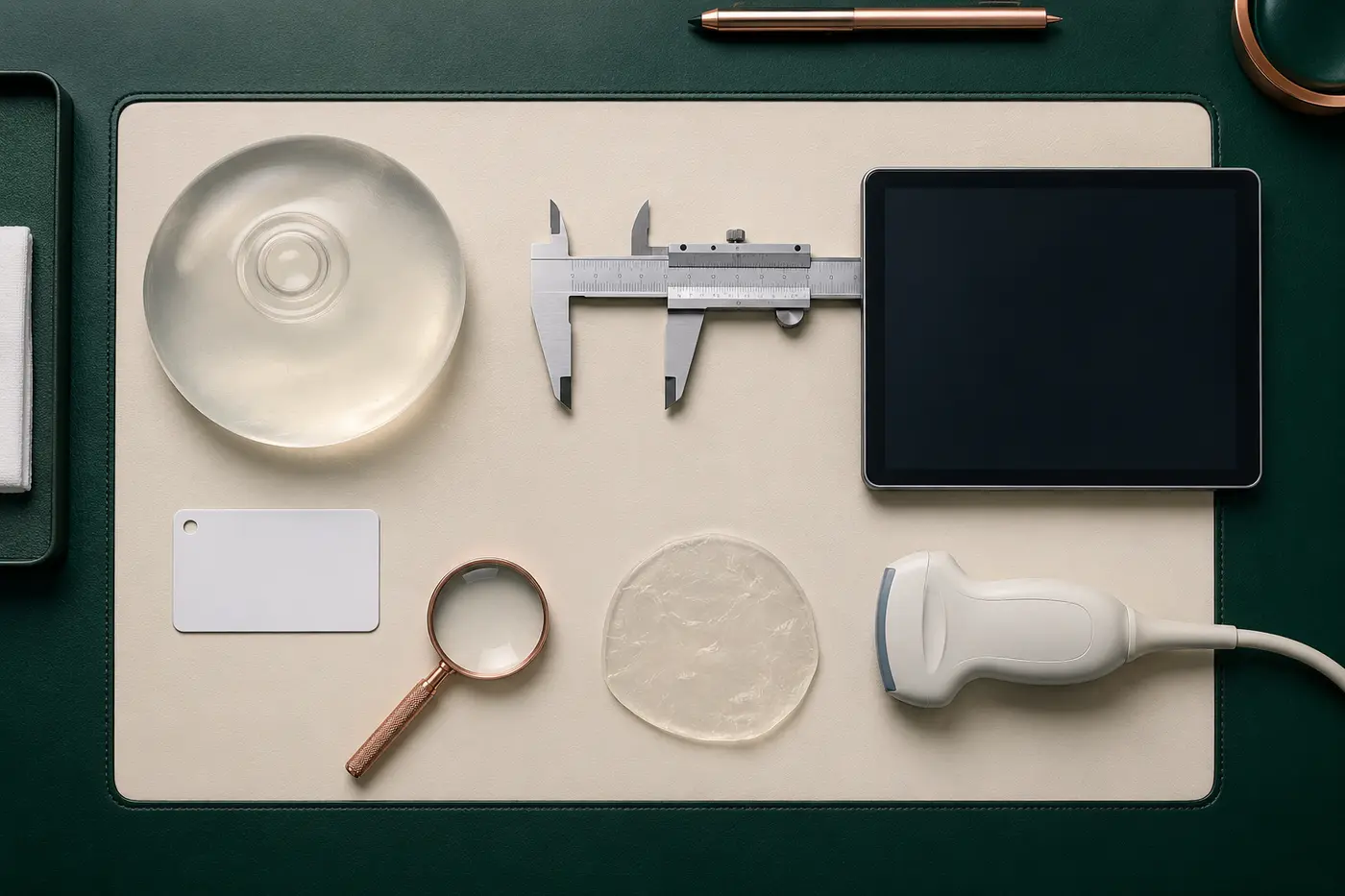
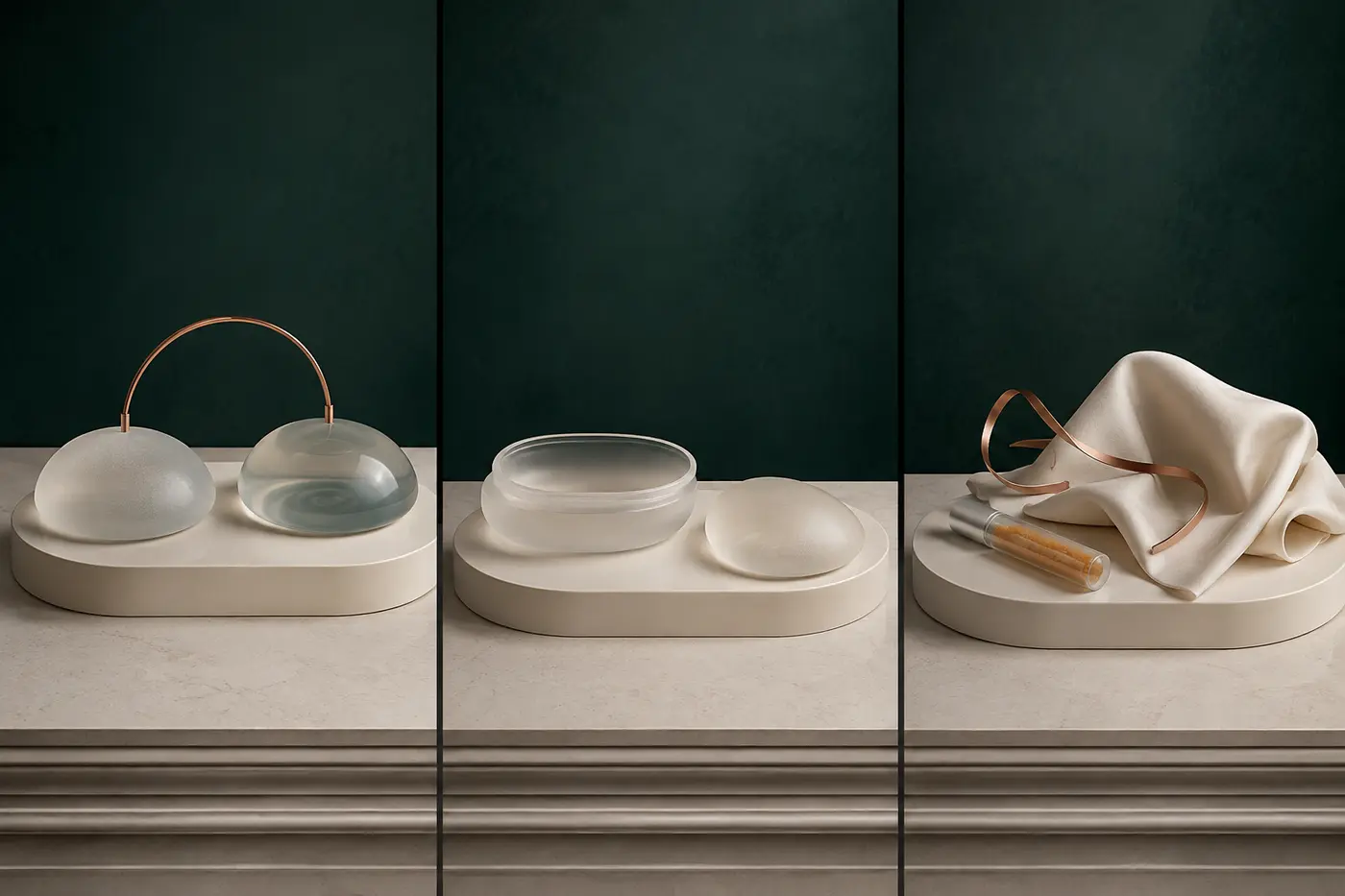
The cover and planning images on this page are illustrative; they do not show a real patient or a treatment result.
Breast implant exchange and removal is more than replacing an older device with a new one. The existing implant and its integrity, the surrounding capsule, implant pocket, breast tissue, skin, nipple level, chest wall and the person’s current priorities are assessed together. Placing another implant, removing the device without replacement, operating on the capsule, repairing the pocket, adding a lift or using fat transfer have different limits, risks and follow-up needs.
Short answer: Breast implants are not automatically exchanged because a particular anniversary has passed, but they are not lifetime devices either. Pain, hardening, shape change, displacement, rupture, late swelling, infection, tissue change or a personal decision to live without implants may prompt assessment for exchange or removal. The appropriate plan is individualised after examination, review of device information and any necessary imaging.
What are breast implant exchange and removal?
During exchange, the existing device is removed and a new breast implant is placed in the same operation. The new device does not have to match the former volume or characteristics, but selection cannot be based only on a wish to go larger or smaller. Breast-base dimensions, soft-tissue coverage, skin elasticity, pocket condition and pre-existing asymmetry all limit the available choices.
During removal, no new device may be inserted. Removal can be performed alone or combined with capsule surgery, a breast lift, limited fat transfer or staged reshaping. “Exchange” and “removal” are not interchangeable operations; their scars, recovery and long-term responsibilities can differ.
Why may exchange or removal be considered?
- A personal decision to stop having implants or change the preferred volume
- Hardness, distortion or pain from capsular contracture
- Rupture, deflation or an imaging concern about implant integrity
- Downward, upward, lateral or medial displacement, rotation or mismatch with the breast base
- Pronounced rippling, visible implant edges or thinning tissue coverage
- Changes in the relationship between the implant and breast after pregnancy, breastfeeding, weight change or ageing
- Infection, wound problems, implant exposure or recurrent fluid
- Late swelling, a mass or concern about a disease involving the capsule
- A previous size, shape or symmetry plan that no longer meets the person’s priorities
These reasons do not lead to the same operation. A person changing volume preference with a soft capsule and a well-positioned pocket needs a different work-up from someone with a tight capsule, rupture or late fluid.
Which symptoms should not wait for a routine consultation?
New or rapidly increasing one-sided swelling, marked hardening, a lump, an enlarged underarm node, unexplained pain, skin redness or colour change, fever, discharge or implant exposure requires prompt medical assessment. Persistent fluid and swelling that begin years after implantation should not be treated as a cosmetic change without investigation.
These signs do not automatically mean one particular diagnosis. Infection, rupture, trauma, a capsule problem and uncommon implant-associated diseases are among several possibilities. Examination, appropriate imaging and, when indicated, sampling of fluid or capsule tissue come first. A suspected or confirmed diagnosis can change the necessary operation.
Must implants be exchanged at ten years?
There is no universal rule requiring surgery solely because ten years have passed. Breast implants are nevertheless not devices expected to remain unchanged for life. As time passes, rupture, capsule changes or another issue requiring reoperation may become more likely.
Follow-up for a person without symptoms depends on implant fill and surface, manufacturer information, the date of surgery, examination and current imaging recommendations. “No symptoms means no review is ever needed” and “every implant must be changed at year ten” are both misleading generalisations.
What information is collected at consultation?
The date and reason for the first operation, implant manufacturer, model, volume, surface, shape, pocket plane, incision and previous complications are recorded. The implant card, operative note and earlier ultrasound, mammography or MRI reports should be brought when available. Missing records do not prevent assessment, but they can add uncertainty to surgical planning.
The history includes when the concern began, pregnancy and breastfeeding, weight change, trauma, breast-health and family history, medicines, nicotine and the desired future volume. It is important to distinguish a wish to retain the same volume, become smaller or larger, live without an implant, or simply address a device problem.
How are examination and imaging planned?
Standing examination considers the breast base, skin and tissue thickness, implant edges and mobility, pocket boundaries, inframammary fold, nipple position, capsule firmness, asymmetry and chest wall. The underarm is examined when symptoms make this relevant. A two-dimensional photograph cannot replace physical assessment and imaging.
Ultrasound can provide information about silicone implant integrity, fluid and surrounding tissues; MRI may be required when findings are uncertain or symptoms are present. Mammography and other breast-cancer screening meet a separate need from device surveillance. Age, symptoms, risk and previous findings determine which tests the breast-health team recommends.
What are the main surgical options?
| Option | When may it be considered? | Important limitation |
|---|---|---|
| Exchange for a new implant | Retaining volume or revising size, shape, surface and projection | The new device still requires surveillance and may lead to future surgery |
| Removal without replacement | A wish to live without implants or a device no longer considered suitable | Volume loss, ptosis, indentation and contour differences may remain |
| Pocket repair | Downward, lateral, upward or medial displacement | Recurrent displacement is possible when tissue support is weak |
| Capsulotomy or partial/total capsulectomy | Capsule hardness, thickness, calcification, rupture or a diagnostic indication | Every capsule does not require complete removal; surgery can add bleeding and tissue-injury risks |
| Removal or exchange with a breast lift | Excess skin, a low nipple or an empty skin envelope after implant removal | Longer scars and additional nipple-blood-supply risks are introduced |
| Fat transfer or a staged plan | Limited contour support, greater tissue coverage or some volume without an implant | A donor area is needed; some fat may not remain and another session may be required |
How is a new implant selected during exchange?
Base diameter, projection, shape, fill and surface are considered alongside volume. A larger implant does not consistently correct loose skin; a smaller implant may reveal excess skin and ptosis within the existing envelope. Pocket dimensions and soft-tissue thickness can restrict device selection.
The existing pocket may be retained, narrowed, enlarged or, in selected circumstances, changed to another tissue plane. Pocket conversion introduces considerations such as animation deformity, edge visibility, displacement and bleeding. Choosing a device is only one part of revision planning.
What may happen after removal without a new implant?
Appearance depends on implant volume, time since implantation, the original natural tissue, pregnancies, weight change, skin elasticity, capsule and nipple position. The breast may look smaller, deflated, ptotic or irregular. Some early indentation and wrinkling may change as the pocket heals and tissues settle.
Preoperative photographs or simulations cannot show the exact implant-free appearance. Some people accept removal alone; others consider a lift, fat transfer or another reshaping procedure at the same operation or later. Each additional operation adds scars and its own risks.
Can implant removal and breast lifting be combined?
When excess skin and a low nipple are pronounced, explant surgery and breast lifting may be combined. The way tissue will behave after the implant is removed cannot always be measured in advance. Thin coverage, a large implant, substantial ptosis, previous scars or blood-supply concerns may favour a staged approach.
A lift does not replace implant volume; it reorganises the existing tissue and skin. Periareolar, vertical or inverted-T scars may be needed. If fat transfer is considered at the same time, donor sites, safe injection volume and variable fat retention must be discussed separately.
What is the capsule and must it always be removed?
The body naturally forms a layer of scar tissue—the capsule—around every implant. A thin, soft capsule without symptoms is not itself a disease. Thickening, hardening, calcification, pain or distortion, as well as rupture, infection, fluid or a diagnostic concern, may create a reason to operate on it.
Capsulotomy releases the capsule; partial capsulectomy removes part of it; total capsulectomy aims to remove all of it where safely possible. Removing a posterior capsule densely attached to the chest wall can add bleeding, injury to surrounding tissues and injury to the lining around the lung. Complete removal is therefore not an automatic requirement whenever an implant is taken out.
What does “en bloc capsulectomy” mean?
En bloc capsulectomy is not simply another name for taking the implant and capsule out in one piece. Current specialty consensus defines it as oncological removal with a margin of uninvolved tissue for suspected or established implant-associated cancer after appropriate medical work-up. It is not a routine label for elective removal.
Total intact capsulectomy describes removal of the capsule and implant as one unit; total capsulectomy removes the entire capsule but not necessarily in one piece. Partial capsulectomy and capsulotomy are separate methods. The capsule finding and its relationship with the chest wall determine what is necessary and acceptably safe.
How is implant rupture assessed?
When a saline implant ruptures, the saline is absorbed and the breast usually deflates noticeably. Silicone-gel implant rupture may cause shape change, pain, firmness or a lump, yet it can also be silent and detected on imaging. Whether silicone remains inside the capsule or has moved beyond it affects the surgical plan.
Photographs and palpation cannot exclude a suspected rupture. Ultrasound and, when needed, MRI are used. Removal of the failed device, the condition of capsule and adjacent tissues, accessible silicone and the wish for a new implant are assessed together. It may not be possible to remove every microscopic particle that has migrated into tissue.
What is capsular contracture?
A thickened, tightening capsule can squeeze the implant. The breast may feel hard, rise, become round or asymmetric, and pain may develop. Clinical grading distinguishes mild firmness from painful, visible distortion; these situations do not require the same response.
Surgical options may include exchange or removal, release or partial/total removal of the capsule and adjustment of the pocket. Recurrence remains possible. Infection, haematoma, implant surface, radiotherapy, individual biology and earlier operations can influence personal risk.
Late fluid, a mass and uncommon capsule diseases
Persistent swelling, fluid, a mass, pain, marked asymmetry, skin rash or an enlarged underarm node developing years after implantation must be investigated for several possibilities, including BIA-ALCL and other very uncommon diseases reported in the capsule. BIA-ALCL is not the usual cancer of breast tissue; it is commonly associated with peri-implant fluid or capsule, and a history of textured surfaces is relevant.
Automatic removal in someone without symptoms and the plan for a person with a suspicious finding are not the same decision. Imaging and appropriate fluid or tissue sampling should precede surgery when disease is suspected. A confirmed diagnosis changes how the implant and capsule are removed and may require multidisciplinary treatment.
Systemic symptoms sometimes called “breast implant illness”
Some people report fatigue, difficulty concentrating, joint or muscle pain, hair or skin change, altered sleep and mood symptoms that they associate with their implants. This group of symptoms is often called breast implant illness or BII. There is no single diagnostic test or symptom list specific only to implants.
Similar symptoms occur with thyroid, rheumatological, infectious, hormonal, nutritional and mental-health conditions, so appropriate medical investigation should not be missed. Some people report improvement after removal, but who will improve and by how much cannot be predicted. Concerns should be heard while the possible benefits and risks of implant and capsule surgery are discussed fairly.
Where may the scars be?
The old incision may be reused when suitable, but the implant, capsule, rupture and any additional operation may require a longer or different access. An inframammary incision is commonly used for exchange and removal. If a lift is added, scars may extend around the areola, vertically downward and, when required, along the breast fold.
Scars are permanent. Previous operations, skin type, nicotine, wound tension, infection, blood supply and aftercare affect their appearance. Both breasts cannot be assumed to develop scars of identical length or colour.
Preparing for surgery
- Obtain the implant card, operative note and previous imaging when possible.
- Complete diagnostic assessment before surgery if new swelling, fluid or a mass is present.
- Plan age- and risk-appropriate breast-cancer screening separately from implant assessment.
- Disclose medical conditions, medicines, supplements, allergies and previous anaesthetic experience.
- Discuss cigarettes, vaping and every nicotine source; cessation timing is individualised.
- Review the separate scars and risks of exchange, removal alone, capsule surgery, lifting, fat transfer and staged options.
- If a new implant will be used, examine device information, manufacturer materials and long-term surveillance responsibilities.
How do surgery and recovery progress?
Surgery takes place in an appropriately licensed hospital and anaesthetic setting. Operating time varies considerably between a straightforward device exchange and a plan combining total capsulectomy, pocket repair and lifting. Drains, support bra, overnight stay and discharge criteria depend on the procedure and individual risk.
| Period | Changes that may occur | General approach |
|---|---|---|
| First 72 hours | Tightness, pain, bruising, swelling and different swelling between sides | Prescribed medicines, short walks and checks for bleeding and circulation |
| Weeks 1–2 | Incision healing, possible drain care and a shape that remains changeable | Planned reviews, appropriate wound care and recommended support garment |
| Weeks 2–6 | Reducing swelling and adaptation to a new volume or implant-free pocket | Increase work, driving and exercise according to personal instructions |
| Following months | Scar maturation and continuing settlement of skin and breast tissue | Do not treat early appearance as final; attend longer-term reviews |

Which postoperative symptoms may be urgent?
Rapidly enlarging one-sided swelling, bleeding that soaks the dressing, increasing pain, marked colour change, high fever, spreading redness, offensive discharge, shortness of breath, chest pain or one-sided calf swelling may require urgent assessment. A sudden change in drain output or exposure of a new implant must also be reported to the surgical team.
What are the main risks?
General possibilities include anaesthetic complications, bleeding and haematoma, infection, fluid collection, thrombosis, poor wound healing, conspicuous scars, persistent pain and further surgery. Breast surgery can cause sensation change, asymmetry, contour irregularity, fat necrosis, impaired skin or nipple–areola blood supply and, rarely, tissue loss.
With a new implant, capsular contracture, displacement, rotation, rippling, visible edges, rupture and later device surgery remain possible. Capsulectomy can add bleeding and chest-wall injury. A lift adds longer scars and blood-supply risks; fat transfer adds resorption, cysts, calcification and fat necrosis.
Nipple sensation, breastfeeding and breast imaging
A sensation change from earlier surgery may persist; another operation can produce temporary or permanent reduction, increase or loss of sensation. Risk varies with the incision, capsule, pocket conversion, lifting, tissue thickness and number of previous operations.
Preservation of breastfeeding cannot be predicted. A device-only exchange does not have the same implications as lifting or extensive tissue surgery. Mammography, ultrasound and MRI teams should be told about current or previously removed implants and any fat transfer.
How does follow-up continue after a new implant?
A new implant does not reset the need for surveillance. The new device card and operative information should be retained, and new changes in the breast or implant should be assessed. FDA labelling recommendations advise a first ultrasound or MRI for an asymptomatic silicone-gel implant at 5–6 years, followed by imaging every 2–3 years; clinicians adapt this schedule to personal risk and local practice.
Device imaging does not replace age- and risk-appropriate breast-cancer screening. Saline and silicone implants do not have identical surveillance needs. Manufacturer advice and emerging safety information should be revisited during long-term follow-up.
How are consultation and travel to Antalya planned?
For a breast implant exchange or removal consultation in Antalya, the implant card, earlier operative records and imaging can be shared in advance when available. A remote conversation helps with history and organisation but cannot replace physical assessment of the capsule, pocket, skin and breast tissue. The final method and any new device are selected after in-person examination.
For people travelling from another city or country, investigations, the licensed hospital, anaesthetic assessment, length of stay in Antalya, drains and early reviews, flight or long-journey timing, urgent contact and follow-up after returning home should be documented. Broader surgery may require a longer interval before safe travel.
Useful questions for consultation
- What do we know about the current implant, its integrity, pocket and capsule?
- Do my symptoms require ultrasound, MRI, mammography or sampling before surgery?
- How would exchange, removal alone and a staged plan differ for me?
- Why will the capsule be treated, or why may part of it be left safely?
- Should lifting or fat transfer be performed at the same operation or later?
- If a new implant is used, how will size, surface, pocket and surveillance change?
- Which volume, ptosis or contour changes may remain without an implant?
- What are the scars, drains, recovery, urgent-contact and possible revision plans?
Medical responsibility for this content

This page is prepared for general information using current patient-safety sources and is medically reviewed by Op. Dr. Bahadır Çelik before publication. The review date displayed on the page indicates completion of that medical review. The content does not replace examination, diagnosis, informed consent or an individual treatment plan.
References
- U.S. Food and Drug Administration — Risks and complications of breast implants
- U.S. Food and Drug Administration — Things to consider before breast implant surgery
- U.S. Food and Drug Administration — Implant labelling and rupture-screening recommendations
- U.S. Food and Drug Administration — Questions and answers about BIA-ALCL
- U.S. Food and Drug Administration — Reported systemic symptoms with breast implants
- American Society of Plastic Surgeons — Breast implant removal
- American Society of Plastic Surgeons — Breast implant removal risks and safety
- Breast Surgery Collaborative Community — Consensus on capsulectomy definitions and management
- BAPRAS — Complications of breast implants
- Republic of Türkiye Ministry of Health — Regulation on health-service information and promotion
FAQ
Frequently asked questions
Must breast implants be exchanged after ten years?+
How may the breasts look after implant removal?+
Is a breast lift always required with implant removal?+
Is the entire capsule always removed with the implant?+
Is en bloc capsulectomy used for every implant removal?+
How is silicone implant rupture detected?+
Will systemic symptoms improve after implant removal?+
Does a new implant require ongoing surveillance?+
Related information
 01
01Breast Augmentation
A comprehensive guide to implants, fat transfer and, where appropriate, breast lift planning based on chest anatomy, tissue coverage, asymmetry, expectations and long-term follow-up.
Read article↗ 01
01Breast Lift Surgery
A comprehensive guide to nipple position, excess skin, existing tissue, scar patterns, implant decisions, recovery, risks and long-term change after a breast lift.
Read article↗ 01
01Breast Reduction Surgery
A detailed guide to symptoms associated with heavy breasts, tissue and incision options, scars, breastfeeding, recovery, risks and long-term follow-up.
Read article↗